
Security Technology Trends in 2025 ?
 By Mishary Al khurasi
- VIP & Personal Protection
- Dec 08, 2024
- 3 minutes read
- 2,376 Views
A look at the latest surveillance, access control, and AI-powered systems being adopted in the Kingdom, and how Fajr integrates them into its services.
🔐 Security Technology Trends in 2025: The Future of Guarding is Smarter Than Ever
In 2025, the security industry is experiencing one of its most transformative phases ever. Gone are the days when the role of a security guard was limited to patrolling and monitoring CCTV screens.
1. AI-Powered Surveillance: From Watchdogs to Analysts
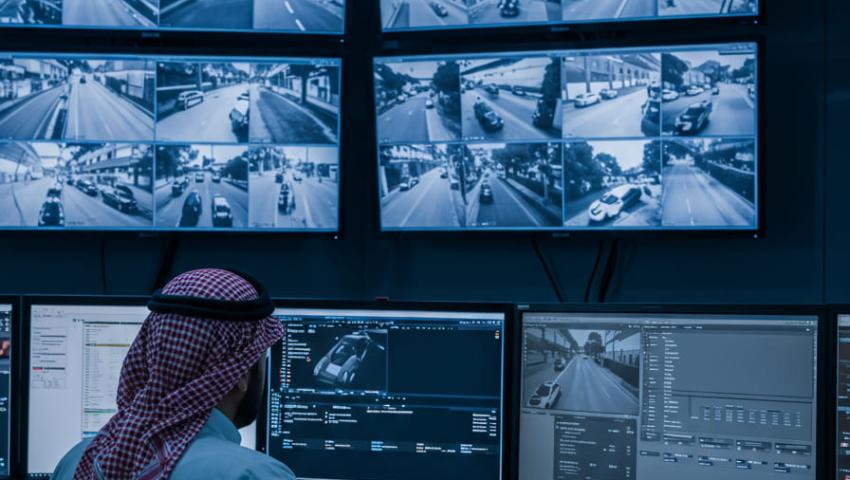
Security cameras today are no longer passive observers. With advanced Artificial Intelligence (AI) and machine learning, modern surveillance systems can:
- Detect suspicious behavior in real-time
- Recognize faces and license plates
- Flag unauthorized access or abandoned objects
Security guards now act more as incident managers, responding to alerts generated by smart systems instead of manually scanning hours of footage.
2. AR-Enhanced Guards: Augmented Reality on Patrol
Thanks to Augmented Reality (AR) headsets and visors, guards are becoming smarter and more situationally aware. These devices provide real-time overlays, such as:
- Emergency exits and escape routes
- Suspect profiles
- Live camera feeds
- Indoor navigation in complex facilities
This allows for faster decision-making during emergencies and improves communication with control rooms.
3. Drones & Robotics: Eyes in the Sky and Ground Support
In expansive areas like campuses, industrial zones, and large events, security drones and robotic patrol units are now supporting human teams:
- Drones provide aerial surveillance and crowd monitoring.
- Robotic guards can detect motion, sound anomalies, or harmful gases.
- Both can be deployed remotely, reducing risk for human guards in hazardous environments.
Security guards are now trained to operate and monitor these autonomous units, turning them into drone pilots and robot supervisors.
4. Smartphones as Command Centers
Mobile apps have become essential tools for today’s guards. Through their smartphones, they can:
- Access patrol routes and log reports digitally
- View live camera feeds
- Communicate via secure channels
- Receive real-time push notifications from sensors and alarms
Geofencing technology also ensures that guards follow specific patrol paths, increasing accountability and efficiency.
5. IoT and Smart Sensors for Real-Time Awareness
The Internet of Things (IoT) has equipped security systems with a new level of responsiveness. Doors, windows, safes, and even equipment are embedded with smart sensors that can:
- Alert guards of unusual movements or forced entry
- Detect smoke, gas leaks, or temperature anomalies
- Notify if an area is left unsecured
This allows guards to shift from routine checks to response-based patrolling, focusing their attention where it’s needed most.
6. Body-Worn Cameras with Live Streaming
Security guards in 2025 are commonly equipped with body-worn cameras (BWCs) that:
- Provide live video feeds to command centers
- Record interactions for legal and training purposes
- Enhance transparency and reduce liability
Some models are even integrated with AI to trigger alerts if aggressive behavior or distress is detected.
7. Behavioral Biometrics & Access Control
Access control systems are evolving beyond keycards and PINs. Behavioral biometrics—like gait recognition, typing patterns, and device interaction habits—are now used in high-security zones.
Security guards play a key role in overseeing these systems and managing exceptions in real-time through mobile dashboards or smart terminals.
8. Cloud-Based Security Management
With cloud computing, all security infrastructure is now centralized and accessible from anywhere. Security guards and supervisors can:
- Manage camera systems remotely
- Track incidents and guard performance
- Access historical data and analytics
This improves collaboration between on-ground teams and remote control centers.
9. Multilingual AI Assistants
In global or multicultural environments like airports, malls, and stadiums, security guards are now supported by AI-based translators and virtual assistants that help them:
- Issue multilingual instructions
- Translate real-time conversations
- Assist with protocol guidance during complex situations
10. Physical Guards with Cyber Awareness
As physical and cyber threats converge, security guards are now trained to recognize:
- Suspicious devices connected to secure systems
- Social engineering attempts
- Signs of data breaches in physical spaces
This hybrid role makes them the first line of defense in both digital and physical security.
🚨 Final Thoughts: Human + Tech = The Future of Security